How to Learn Multiplication Tables: A Singapore Parent's Guide


The easiest way for a child to learn multiplication tables is to build understanding first and memory second. Start with counting in groups and skip-counting, move through the tables in a sensible order (twos, fives and tens first), and practise for five to ten minutes on most days instead of in long, tiring sessions. Add rhythm, games and a calm, encouraging tone, and most children find the multiplication tables far more manageable than they expected.
This guide shows you when Singapore schools introduce each multiplication table, what your child should be comfortable with before then, an order that works, practice ideas for a busy week, and how to help if your child is finding it difficult.
When do Singapore Children Learn Their Multiplication Tables?
The timing matters because it tells you how much pressure is reasonable at each age. In Singapore, the MOE Primary Mathematics Syllabus introduces the ideas of multiplication and division, and the x symbol, in Primary 1. At that stage children work with multiplication within 40 and division within 20. Formal multiplication tables arrive in Primary 2, with the multiplication tables of 2, 3, 4, 5 and 10. The multiplication tables of 6, 7, 8 and 9 follow in Primary 3, together with division with remainder and multiplication up to 3 digits by 1 digit.
Schools also stagger the multiplication tables across the year. One MOE primary school's Primary 2 mathematics page shows Term 2 covering the multiplication tables of 2, 5 and 10, and Term 3 covering the multiplication tables of 3 and 4. So your child is not expected to know everything at once.
Here is the pattern at a glance:

If your child is still in kindergarten, there is nothing to rush. Early years are for number sense, and you can read more about the early stages in our guide to Primary 2 maths tuition, which also explains what to expect when the multiplication tables begin.
What Your Child Should Know Before the Multiplication Tables
Multiplication tables are much easier when the ground beneath them is solid. Before formal multiplication tables, we like to see a child who can:
Count forwards confidently and count objects reliably.
Understand number bonds, for example that 5 can be made of 2 and 3, and that 10 can be split in several ways.
Add and subtract comfortably within 20.
Understand that multiplication means equal groups, so 3 × 4 is three groups of four.
A child who understands number bonds deeply tends to pick up multiplication tables more quickly, because multiplication is repeated addition in disguise. If your child hesitates at 7 + 5, that is the place to spend a few weeks first. It is a bridge worth building before the multiplication tables, not a step to skip.
An Easy Order for Learning the Multiplication Tables
Most parents try to go from the 2 multiplication table to the 12 multiplication table in a straight line. A friendlier sequence follows how hard each table feels:
Twos, fives and tens. These match skip-counting and have clear patterns, so they give early wins.
Threes and fours. The fours are simply the twos doubled, which is a useful trick to point out.
Sixes, sevens and eights. These are the trickier ones, and by now your child already knows many of the facts from the earlier tables (6 × 3 is the same as 3 × 6).
Nines. Save these until patterns feel familiar, because the nines have lovely patterns to spot.
This is the order recommended in a Singapore guide to teaching kids multiplication tables, which also suggests practising for five to ten minutes a day for most days. The same guide notes that children vary: some lock in their multiplication tables within a few weeks, others take a couple of terms. Both are normal.
One more shortcut: because 3 × 7 and 7 × 3 give the same answer, the number of facts to learn shrinks quickly. By the time your child reaches the sevens, only a handful of new facts remain: 7 × 7, 7 × 8, 7 × 9 and a few others.
Easy Ways to Make the Tables Stick
Start with Objects and Groups
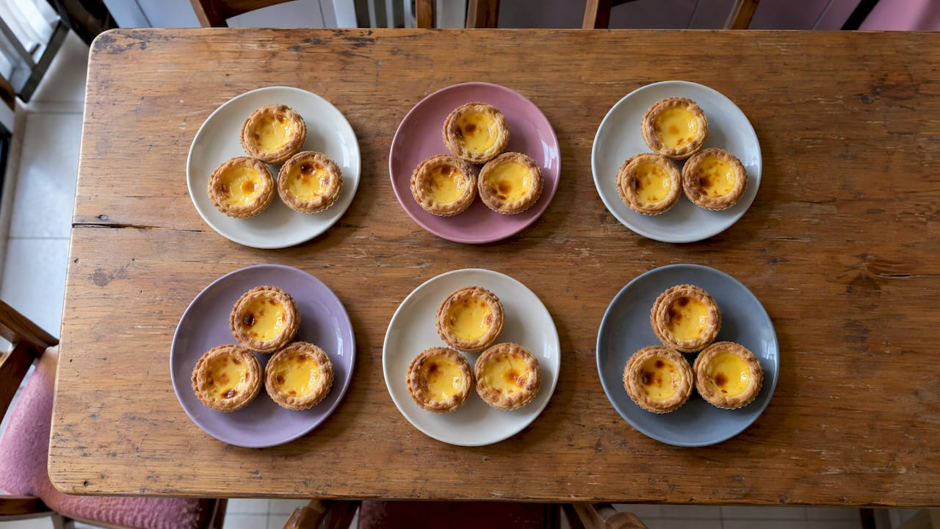
Before any chanting, let your child see what multiplication means. Lay out egg tarts, coins or building blocks in equal groups and ask, "How many altogether?" Everyday objects turn abstract facts into something concrete. Schools do the same: Pasir Ris Primary School uses an aid called Times Sticks, which gives children a concrete, visual way to see multiplication as repeated addition.
Skip-Count with Clapping and Tapping
Skip-counting in twos, fives and tens while clapping or tapping the table builds rhythm and a sense of the number line. Let your child count 5, 10, 15, 20 on the stairs, one step per number. The same school also weaves mathematical terms into songs through its Music in Maths project, a good reminder that tuneful learning belongs in the classroom as well as at home.
Spot the Patterns
Patterns turn memorising into noticing, which children enjoy:
Fives always end in 0 or 5
Tens are simply the number with a 0 added
Nines have digits that add up to 9 (18, 27, 36, 45)
Twos are doubles, and fours are double the doubles
Use Rhythm, Movement and Humour
Oxford Owl's Times Tables in School booklet points out that rhythm, sound, movement and humour all help children remember. Children can give a multiplication table a tune and a beat, and even add a few dance moves. It also notes that some children learn best by reciting the whole calculation, while others do better reciting only the answers and using their fingers to keep track of which multiple they have reached. Watch which style suits your child and lean into it.
Play Short, Quick Games
Games work because they are short and low-pressure. A few that need nothing but what you have at home:
Cards: flip two cards from a deck and multiply them.
Bingo, Snap and Pairs: adapt them into quick-fire multiplication-table versions, as the Oxford Owl booklet suggests, and let your child look at a table before trying without it.
Teach me: ask your child to teach you a table. Explaining is a powerful way to learn.
Waiting-time quizzes: ask two or three facts while queuing for the MRT or waiting for the school bus.
For more ideas, see our post on seven ways to make maths practice fun at home, or try some of the digital maths games you can play with your child.
A Simple Home Routine That Fits a Singapore Week
Busy school weeks leave little room for hour-long study sessions, and they are not needed. A routine that tends to work looks like this:
Pick a fixed, easy moment. After dinner, on the way to school or during breakfast. Consistency matters more than length.
Choose one table of the week. Stick it on the fridge and read it together over breakfast.
Begin with three or four lines. Oxford Owl suggests starting small and adding one or two more lines as your child grows confident.
Read first, recall second. Let your child read the table aloud before trying from memory.
Finish with a game. Two minutes of cards or a quick quiz ends the session on a good note.
Revisit older tables. Mix in one or two earlier facts so nothing fades.
Five to ten minutes is enough. If your child is tired, stop. A short, happy session beats a long, reluctant one every time.
When the Multiplication Tables Feel Difficult
Some children breeze through the twos and then stall at the sixes, sevens and eights. That is common. The Dyslexia Association of Singapore notes that most students can recall facts from the 1× to 5× tables but find the 6× to 9× tables harder to memorise and retrieve, and it offers finger-based techniques for the 8 and 9 multiplication tables.
A few gentle strategies:
Use addition as a back-up. The association suggests adding on and renaming, so if your child forgets 6 × 4, they can work from 6 × 2 and double it.
Make a multiplication table strip. The same page suggests children make their own multiplication table strips, which gives them ownership of the tool.
Vary the format. A DASINT teacher describes supporting an older student by presenting equations in different formats and sequences, using short verbal quizzes and a multiplication table chart for reference.
Look at one fact at a time. Find the two or three facts that keep tripping your child up and give them extra attention, rather than restarting the whole multiplication table.
Your own reaction matters too. A calm "let us look at that one again" keeps the door open, whereas a sigh can make a child freeze. Praise effort and steady practice, not just correct answers, and avoid comparing your child with a sibling, cousin or classmate.
If difficulties with numbers seem persistent, our articles on the signs a child needs maths support at school, and on whether abacus and mental arithmetic can help children with dyslexia or dyscalculia, may help you decide what to do next. If you suspect a learning difference, speak to your child's teacher or an educational professional.
Our Perspective on Learning Multiplication Tables
We believe multiplication tables should feel like a bridge, not a wall. Many children meet them as a list of facts to memorise, and the pressure of that list can make numbers feel stressful before a child has had a chance to enjoy them.
Our programmes start from a different place. Children learn on a physical abacus using a two-hand, four-finger technique, which we designed to engage both sides of the brain and to build logical and creative thinking together. Because they see quantities move and group on the beads, multiplication stops being an abstract chant and becomes something they can picture.
From there, we guide children step-by-step from the physical abacus towards mental arithmetic, so that the picture of the beads eventually lives in their heads. Songs, games and physical activities keep sessions playful, and self-paced online practice lets each child move at the speed that suits them.
The result we aim for is a child who meets numbers with curiosity, who calculates with speed and accuracy, and who keeps trying when something is tricky. Multiplication tables then become one more thing they are able to do, rather than something they dread.
Looking for Structured Support?
Some families prefer a teacher to guide the process, especially when schoolwork is busy. A good class should keep your child engaged, move at a pace that suits him/her and give regular guided practice so that skills build on each other. Ask how progress is explained to you and how practice continues at home.
At Mentalmatics, our Kindy Class introduces younger children to number sense through songs, games and activity. Our Foundation programme builds abacus skills and the four operations, including multiplication, and our Maths tuition supports primary school children with their school maths. You can book a paid trial class to see how a session feels for your child.

For a wider look at how this approach connects to school, read about how abacus and mental arithmetic help your child's primary school maths journey, or our overview of mental arithmetic in Singapore.
A Worked Example: Learning the Sevens in a Week
Seeing the steps laid out can make the plan feel more real. Suppose your child is in Primary 3 and the 7 multiplication table is next. Many of its facts are already known from earlier multiplication tables: 7 × 1, 7 × 2, 7 × 5 and 7 × 10 come from the twos, fives and tens, while 7 × 3 and 7 × 4 come from the threes and fours (as 3 × 7 and 4 × 7). That leaves only a few new facts: 7 × 6, 7 × 7, 7 × 8 and 7 × 9, and 7 × 6 matches 6 × 7 from the sixes.
Here is how a calm week might look:
Day 1: Skip-count in sevens on a number line or with beads, then read the table aloud together.
Day 2: Circle the facts your child already knows. Celebrate how few are left.
Day 3: Practise the new facts with cards. Flip a card, multiply by 7.
Day 4: Let your child make a table strip and use it as a reference.
Day 5: Quick-fire quiz, with the strip available for any fact that slips.
Weekend: Ask your child to teach you the sevens, then play a short game.
Notice how little time each day takes. The idea is to create a feeling of progress, which is what keeps a child willing to return the next day.
Common Questions Parents Ask About Multiplication Tables
Should my child memorise multiplication tables or understand them?
Both, in that order. Understanding that 4 × 6 means four groups of six gives meaning to the fact, and repeated practice then makes recall quick. Children who understand where an answer comes from can also rebuild it if memory slips.
Do we need to use worksheets?
Not necessarily. Worksheets are one option, but games, songs, cards and everyday objects work well too, particularly for younger children. Choose a mix your child enjoys, and keep every session short.
How long should daily practice be?
Five to ten minutes on most days is a good target. It is better to practise little and often than to do one long session at the weekend.
Frequently Asked Questions
What is the easiest way to learn multiplication tables?
Start with twos, fives and tens, using skip-counting, objects and patterns, then move to threes, fours, sixes, sevens, eights and finally nines. Practise for five to ten minutes on most days and finish with a quick game. Understanding what each fact means makes it easier to remember.
At what age should a child learn multiplication tables in Singapore?
In the MOE syllabus, multiplication ideas begin in Primary 1, the tables of 2, 3, 4, 5 and 10 come in Primary 2, and the tables of 6, 7, 8 and 9 follow in Primary 3. Before that, kindergarten children benefit most from counting, number bonds and playing with groups of objects.
How can I help my child who keeps forgetting the 6, 7, 8 and 9 multiplication tables?
These tables are the ones many children find hardest, so you are not alone. Use known facts and addition as a back-up, let your child make a table strip, try finger techniques for the eights and nines, and focus on the two or three facts that keep slipping. Stay calm and praise effort.
Are multiplication tables classes for kids worth considering?
They can suit families who want a teacher to guide the steps and keep practice engaging. Look for playful sessions, a pace that fits your child, and clear communication about progress. At Mentalmatics, a paid trial class lets you see how our programmes feel for your child.
Recommended
How Mentalmatics Can Help
At Mentalmatics, multiplication tables rest on the understanding this guide recommends: meaning first, memory second. Through the two-hand, four-finger abacus method, children handle equal groups and number bonds with their own hands, then picture them mentally. Facts become connected patterns rather than isolated chants. Songs, games and movement keep short, regular practice enjoyable, and an online portal supports the five-to-ten-minute home routine. Instructors set the pace for each child, so children who need a few terms to feel secure are never rushed.
To find out more, talk to us or register for a trial class using the link below!