
Abacus Learner Outcomes Parents Can Clearly See


A child who once counted every object one by one can begin to answer a calculation with calm, quick confidence. That visible shift is one of the most encouraging abacus learner outcomes for parents: mathematics starts to feel like a skill they can practise, improve and enjoy rather than a subject to fear.
An abacus programme is not only about producing fast answers. When children learn to move the beads with both hands, picture the abacus mentally and apply clear calculation methods, they are building habits that support classroom learning and everyday problem-solving. Progress is gradual, and every child develops at a different pace, but the right instruction gives young learners a purposeful path forward.
What Abacus Learner Outcomes Really Mean
Parents often notice speed first. A child may complete addition or subtraction questions more quickly than before, or mentally check an answer without reaching for fingers, paper or a calculator. Speed matters, but it is only valuable when it is paired with accuracy and understanding.
Meaningful abacus learner outcomes include the ability to recognise number relationships, follow a method carefully, sustain attention and recover when an answer is incorrect. These are practical learning behaviours, not just performance statistics. A child who can slow down, identify an error and try again is gaining mathematical resilience alongside calculation skill.
For preschoolers and kindergarten learners, outcomes may begin with number recognition, counting with purpose and confidence using quantities. Primary-school children may progress toward faster mental calculation, stronger command of the four operations and greater readiness for word problems. The target should match the child’s starting point, not an adult’s timetable.
From Moving Beads to Mental Pictures
The physical abacus gives young children something concrete to see and touch. Rather than treating numbers as distant symbols on a worksheet, they can represent value through bead movements. A structured two-hand, four-finger method also encourages coordinated, consistent actions, helping children learn a repeatable way to calculate.
With practice, learners no longer need to rely entirely on the physical tool. They begin to visualise the bead positions in their minds and manipulate that mental image to solve questions. This transition from physical abacus to mental arithmetic is a major milestone because it shows that the child is carrying the method beyond the classroom table.
That does not mean every learner will become equally fast at the same time. Some children enjoy rapid drills immediately, while others need more repetition to make each movement automatic. Both pathways can lead to progress when lessons are paced well and practice remains encouraging.
Better Number Sense and Calculation Accuracy
A strong foundation helps children see numbers as connected quantities. They become more familiar with combinations that make 5, 10, 50 or 100, and they learn how addition and subtraction affect value. As skills advance, multiplication and division become less intimidating because children already have a clearer relationship with numbers.
Accuracy develops through repeated attention to method. Children learn to listen, observe, move the correct beads and check their work. When they make mistakes, the aim should not be embarrassment or pressure. It should be identifying where the process changed and giving the child another chance to apply the correct rule.
This is especially helpful when school mathematics becomes more complex. A learner who has practised numerical patterns may be better prepared to estimate whether an answer makes sense, spot a simple calculation error and approach multi-step questions with less hesitation.
Focus, Listening and Learning Stamina
Abacus practice asks children to concentrate for short, purposeful periods. They must listen to a question, process the numbers, use a method and respond. Over time, this can strengthen their ability to stay with a task instead of giving up at the first difficult step.
For young children, focus grows best when the experience feels achievable. Songs, games, visual activities and age-appropriate challenges can make practice lively while preserving the discipline needed for real improvement. Enjoyment is not separate from learning here. It helps children return to practice with a willing attitude.
Parents may see this outcome outside maths as well. A child may become more comfortable following a sequence of instructions, sitting with a structured activity or completing a small task independently. These changes vary by child, but they are worth noticing because they support learning across subjects.
Confidence Comes From Knowing How to Start
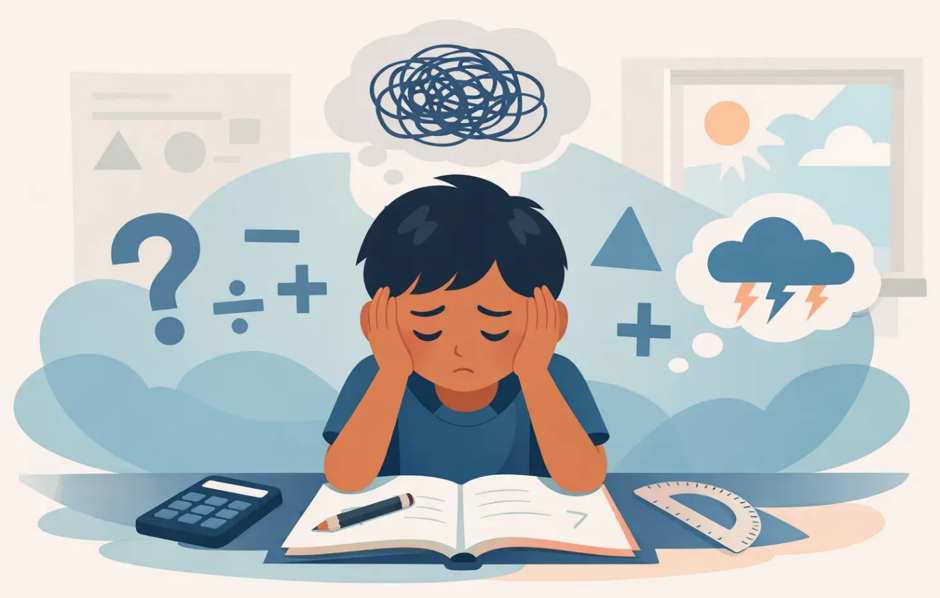
Many children struggle with mathematics not because they lack ability, but because they do not know what to do first. An abacus method gives them an entry point. They can set up the numbers, apply the operation and work through the steps instead of staring at a question and waiting for help.
That sense of independence can change a child’s relationship with maths. Small wins matter: completing a worksheet with fewer prompts, volunteering an answer or proudly demonstrating a mental sum at home. Confidence should be built on real skill, not empty praise, so children learn that effort and practice lead to improvement.
Parents can support this without turning home into another classroom. Ask your child to show you one calculation strategy, celebrate careful corrections and use brief number moments during daily routines. Counting change, comparing quantities or working out a simple total can help children see that numbers are useful beyond a test paper.
Applying Skills to School Mathematics
Mental arithmetic is valuable, but it should work alongside broader mathematical learning. Children still need to understand concepts, read questions carefully, explain their reasoning and use written methods when appropriate. A fast answer alone does not solve every primary-school maths problem.
This is why progressive programmes should include preparatory mathematics and problem-sum skills, not only speed drills. Learners benefit from practising addition, subtraction, multiplication and division in ways that connect calculation to real questions. They learn when to calculate mentally, when to write down steps and when to check their answer.
At Mentalmatics, this progression is designed to help children move from foundational bead work toward confident mental calculation while continuing to build practical maths skills. Online reinforcement can also be useful for revisiting familiar methods at a child’s own pace. The best results come when digital practice supports instructor guidance and does not replace attentive teaching.
How Parents Can Recognise Meaningful Progress
Look beyond a single timed test. A child’s development is often clearer over several weeks or months than from one lesson to the next. Keep an eye on whether calculations are becoming more accurate, whether your child needs fewer reminders and whether they can explain what they are doing.
Four signs often point to healthy progress:
Your child approaches number activities with less avoidance and more curiosity.
They use the abacus method more independently and make fewer repeated errors.
They can complete familiar calculations with growing speed while staying accurate.
They show greater confidence tackling school maths and checking their own work.
If progress seems slow, that is not necessarily a sign that the programme is unsuitable. Young learners may need more time with a particular concept, especially when they are also adjusting to school demands, language-based word problems or new routines. Speak with the instructor, understand the specific skill being practised and focus on consistent attendance and short, positive reinforcement at home.
The most valuable outcome is not simply a child who answers quickly. It is a child who sees numbers as manageable, believes effort can make them stronger and carries that confidence into the next mathematical challenge.
How Mentalmatics Can Help
At Mentalmatics, every learner outcome this article describes – faster, more accurate calculation, stronger number sense, improved focus and the confidence to approach a problem independently – is what the programme is structured to deliver. Through the two-hand, four-finger abacus method, children progress from concrete bead work to mental visualisation at their own pace, with songs, games and an online portal keeping practice consistent and enjoyable. Instructors track accuracy, method and concept mastery, giving parents clear, meaningful markers of progress at every stage.
To find out more, talk to us or register for a trial class using the link below!


Comments